Adamas Guitar History and Development Document
Year: 1977
This internal Ovation document traces the development history of the Adamas guitar from its proto unit origins through various design iterations, detailing technical changes to the soundboard, neck, bridge, and other components. It chronicles serial number milestones from the first prototype through production models, noting key changes such as the carbon graphite soundboard, new soundhole locations, and the introduction of the Adamas II as a more affordably priced variant. The document concludes by positioning the Adamas as a stepping-stone to better Ovation acoustic guitars yet to come.
Transcription:
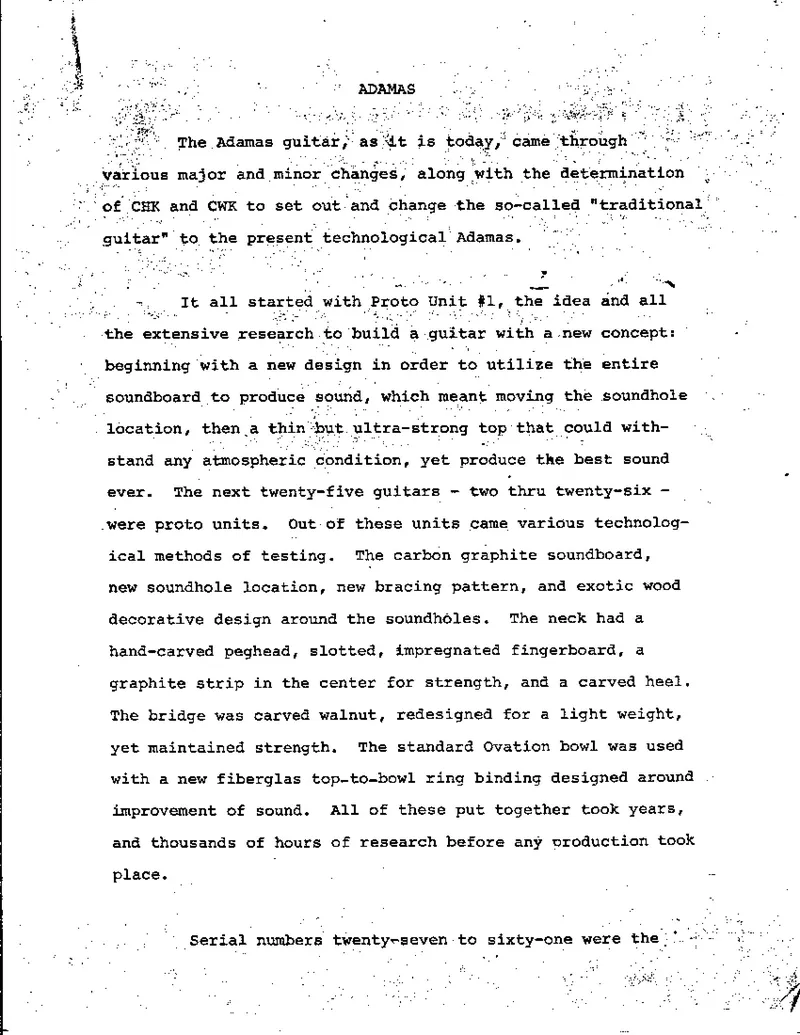
ADAMAS
PAGE 1
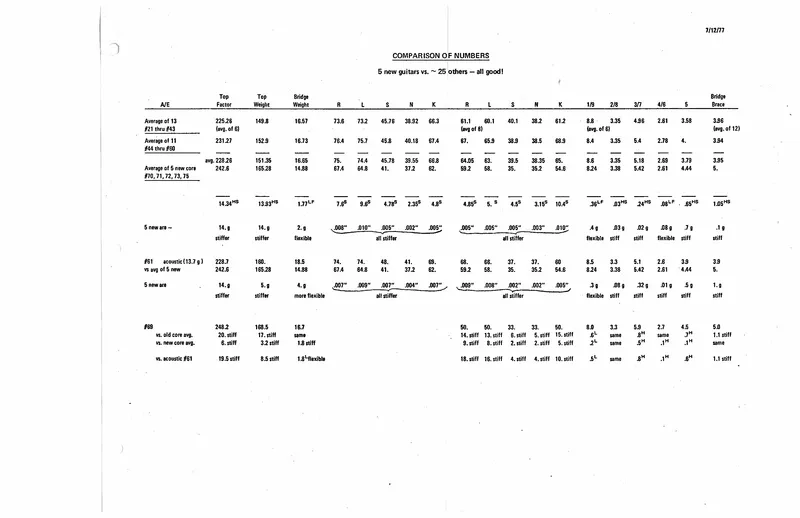
It all started with Proto Unit #1, the idea and all the extensive research to build a guitar with a new concept: beginning with a new design in order to utilize the entire soundboard to produce sound, which meant moving the soundhole location, then a thin but ultra-strong top that could withstand any atmospheric condition, yet produce the best sound ever. The Adamas guitar, as it is today, came through various major and minor changes, along with the determination of CHK and CWK to set out and change the so-called "traditional guitar" to the present technological Adamas.
The next twenty-five guitars two thru twenty-six were proto units. Out of these units came various technological methods of testing. These included:
• The carbon graphite soundboard.
• New soundhole location and new bracing pattern.
• Exotic wood decorative design around the soundholes.
• The neck had a hand-carved peghead, slotted, impregnated fingerboard, a graphite strip in the center for strength, and a carved heel.
• The bridge was carved walnut, redesigned for a light weight, yet maintained strength.
• The standard Ovation bowl was used with a new fiberglas top-to-bowl ring binding designed around improvement of sound.
All of these put together took years, and thousands of hours of research before any production took place. Serial numbers twenty-seven to sixty-one were the start of a small production run, with very little tooling all hand work and requiring many hours per unit.
PAGE 2
A large percentage of these first units went to performing artists, who were overwhelmed with the quality of the sound. During that production run, it became very clear that necessary design changes would have to be made in order to make the guitar more produceable. Sixty-one was the last unit of the original configuration.
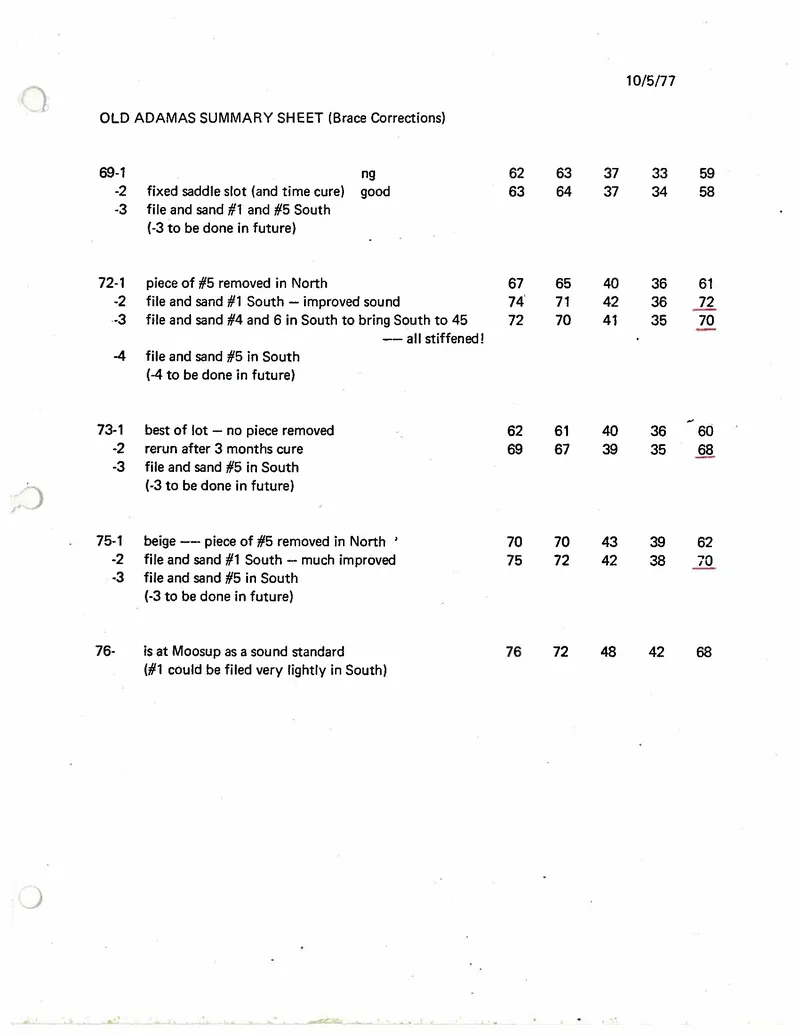
More research and design changes took place again in a time span of approximately one year, to make it more produceable, yet to improve on it if possible. Sixty-two through seventy-six had a new peghead design and a Kaman Bar casting for strength, along with making it more stable through atmospheric changes. The exotic wood design epaulettes were changed from wood to a photographed mylar material, and some minor cosmetic changes were made.
After these units were complete production stopped again and an extensive tooling program took place, along with the reevaluation of the entire guitar. On August 15, 1977, production resumed, starting with number seventy-seven, with the configuration still being used today, with some minor cosmetic improvements. The changes were:
• A new fiberglas ring design.
• A SMC bowl with a built-in heel block.
• A new access door location.
• A better quality neck.
PAGE 3
Wooden epaulettes came back redesigned somewhat. Colors and quality in general improved. Some changes have taken place along the way and will continue to, both in appearance and sound, along with quality.
Specific Milestones:
• #172: A quintade bracing was introduced to improve sound.
• #213: The first production 12-string.
• #419: All 12-string necks had Pakawood fingerboards.
• #600: The signature of approval came from CWK.
• #672: Epaulette bonding method changed, improving quality appearance.
• #812: New and bigger access door location, stereo added as standard on all electrics, and a white binding strip around the soundboard.
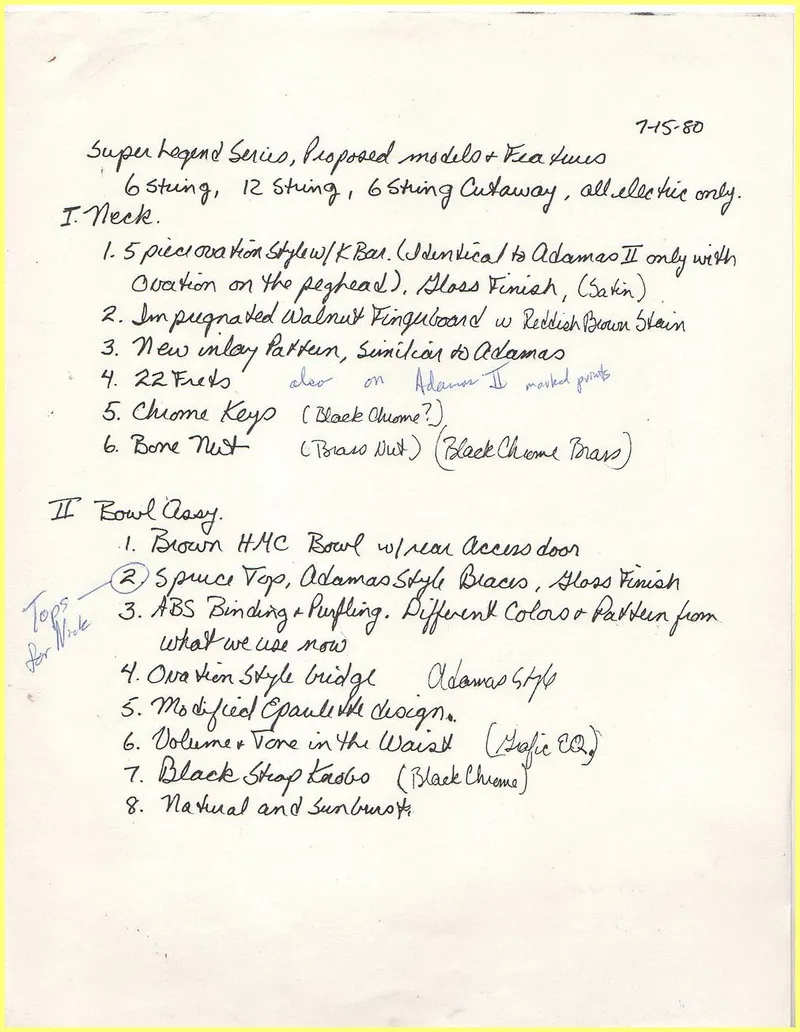
Research again has taken place, generating the birth of the Adamas II, a more reasonably priced guitar, with all the quality and background put into a cheaper package. The Adamas II featured the SMC bowl, a regular Ovation-type neck, and an outer ring binding of ABS material. It also used an epaulette design with fewer pieces of woods bonded together, but without lacking in quality of sound. The Adamas has been the stepping-stone to better and better Ovation acoustic guitars yet to come
 Catalog
 Advertisement
 Brochure
 Price List
 Info Sheet
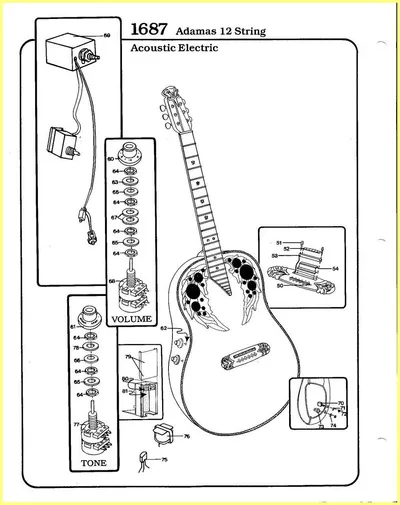 Parts Catalog
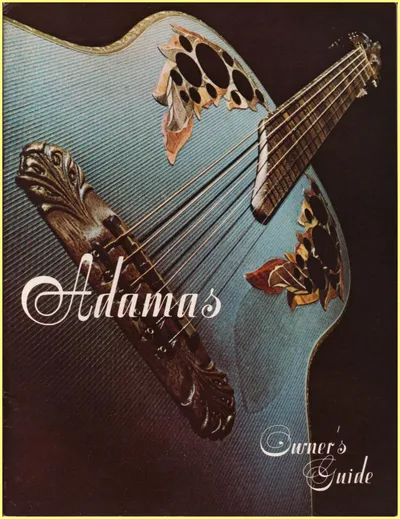 Manual
 Magazine & Review
 Dealer Documents
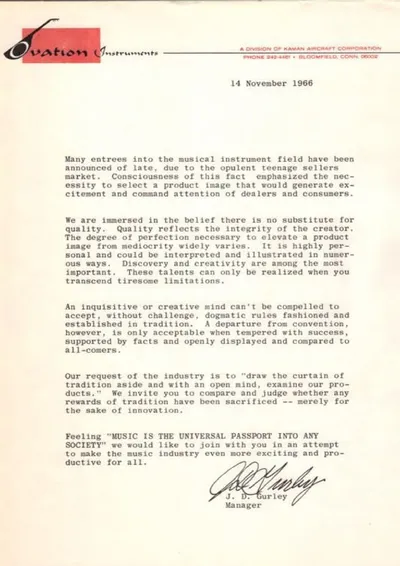 Historical Documents